
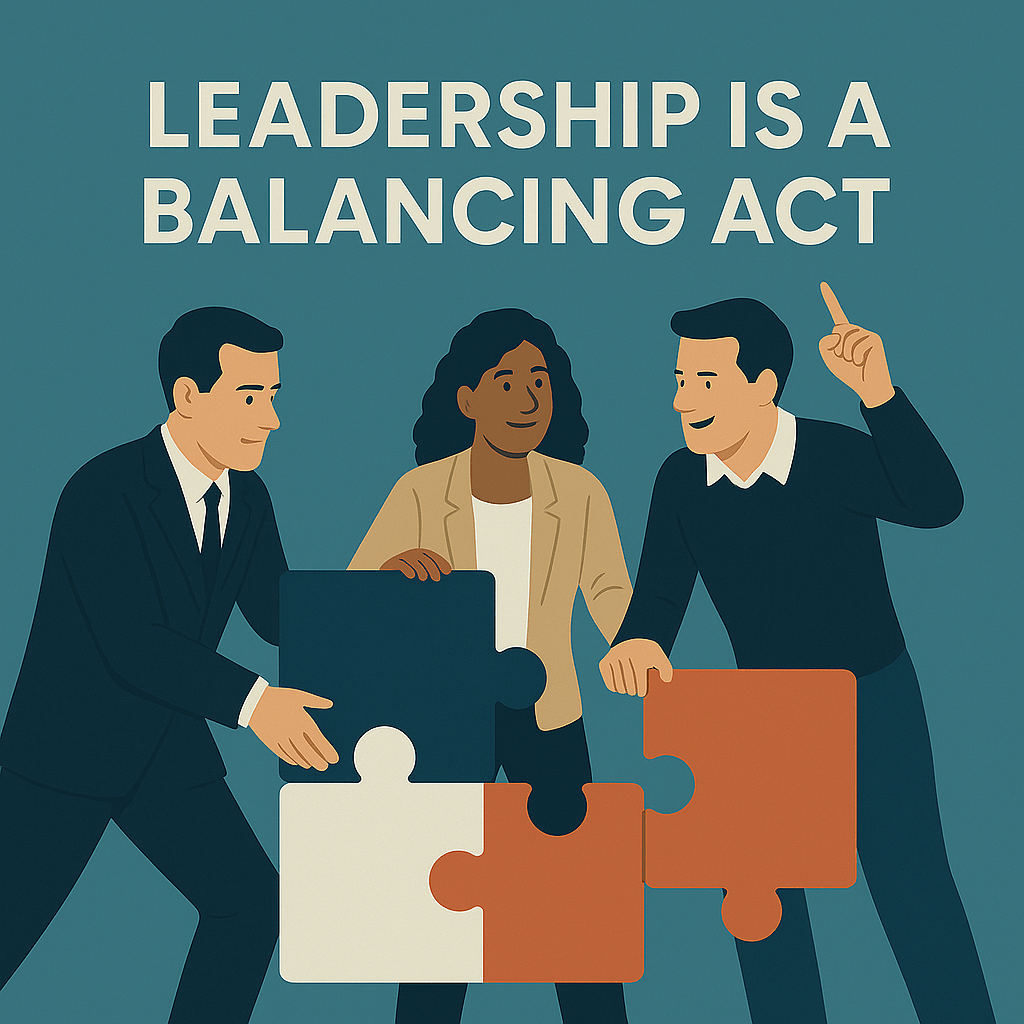
Leadership is often portrayed as a charismatic force or a title bestowed by rank. But in practice, it’s much simpler—and far more demanding. At its core, leadership is the ability to solve problems that move the team and organization forward while simultaneously earning the trust of your team. One without the other is incomplete.
The Task Side: Leadership as Problem-Solving
Every leader needs to be, first and foremost, a problem-solver. Whether it’s clearing obstacles, allocating resources, or making tough calls under pressure, your value to the team is measured by your ability to deliver results.
This is especially true in high-stakes environments like the military, where leaders are trained to adapt quickly, manage risk, and execute with discipline. These skills translate seamlessly into civilian roles like project management, where the ability to navigate complexity and drive outcomes is paramount.

However, problem-solving isn’t just about putting out fires. It’s about creating systems that prevent them. Great leaders build environments where others can think critically, take initiative, and grow. This is the essence of intellectual stimulation—a key component of transformational leadership.
Being a problem-solver alone doesn’t make you a leader, it just makes you effective. We all know those who are extremely toxic, but can drive results. These are the people who will eventually fail and the team won’t be there to prop them up.
The People Side: Leadership as Earned Trust
Solving problems gets the job done. But earning trust ensures your team wants to do the job with you. Trust isn’t granted by position; it’s earned through consistent actions.
As Rick Warren aptly put it, “Leadership is learned, earned, and discerned. You develop it. It’s based on trust and credibility. Others see it in you. You can’t demand it.”

Trust is built in small moments—how you respond to stress, how you listen, how you follow through. It’s lost quickly but earned slowly. I personally live by the belief that the formula for trust is to be visible, interested, and involved:
- Being transparent about decisions (Visible).
- Walk the floor or drop into virtual calls without an agenda (Visible).
- Owning your mistakes (Visible).
- Encourage input prior to making decisions (Interested).
- Ask follow-up questions to learn more, not just waiting to talk (Interested)
- Spotlight ideas from the team (Interested)
- Follow through on action items (Involved)
- Roll up your sleeves and take tasks when team is overwhelmed (Involved)
- Give direct, timely feedback (Involved)
The Balance: Why You Need Both
A leader who only focuses on tasks may deliver short-term results but risks burning out the team. Conversely, a leader who only focuses on relationships may be well-liked but ineffective.
The sweet spot is in the balance. Solve problems decisively, but do so in a way that builds trust. Empower your team to think and act, while holding yourself accountable to the same standards.
At Deliberate Development, we believe leadership is a daily practice of both execution and integrity. It’s not about being perfect—it’s about being deliberate.
 deliberatedevelopment.org