

“I know I should be developing my team… but when?”
If you’re buried under emails, deadlines, and back-to-back meetings, mentoring can feel like one more thing you just don’t have time for. It sits on the list right next to “update LinkedIn profile” and “finally read that book everyone recommends.”
But what if mentoring didn’t require a formal sit-down or an hour blocked on your calendar? What if you could develop your people in five-minute increments?
Mentoring Doesn’t Always Mean a 1-Hour Sit-Down
The myth is that mentoring = long, structured, sit-down conversations with career plans and development binders.
The reality? You can mentor in the margins.
Those five minutes before a meeting starts.
That walk to the elevator.
The quick Slack or Teams reply.
The brief follow-up after a presentation.
Development happens when people feel seen, guided, and supported. And that doesn’t require a calendar invite—it requires intention.
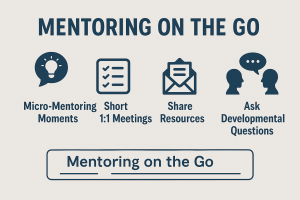
Leverage ‘Micro-Mentoring’ Moments
Mentoring doesn’t have to be dramatic. Sometimes the most impactful moments are the smallest ones:
- Give feedback on the fly. “You handled that question well, especially how you paused before responding.”
- Share a relevant story. “I once had a client like that too… here’s how I approached it.”
- Ask a developmental question. “What part of that project stretched you the most?”
These moments compound. Over time, they build confidence, trust, and growth. You’re not giving a lecture, you’re planting seeds.
Systemize 1:1s for Growth
If you want something more consistent, you don’t need a full hour.
Try a 20-minute check-in every 2–4 weeks, using a simple flow:
- Wins – What’s going well?
- Challenges – What’s in your way?
- Goals – What are you working toward?
- Try One Thing – What’s one thing you’ll try differently?
It’s structured, but not stiff. It shows your team member that you’re invested without overloading either of you.
Leave Trails of Development
You don’t need to create custom development plans from scratch every time. Try leaving “development breadcrumbs”:
- Send an article with a quick note: “Thought of you when I read this.”
- Record a quick voice note: “Here’s one way I’ve handled something similar…”
- Forward a stretch opportunity: “You should present at this, it fits your strengths.”
Each one takes less than a minute, but the impact is lasting. You’re not just managing; you’re sponsoring their growth.
Use Questions as Tools
Some of the best mentoring doesn’t come from giving answers, but asking better questions. Even quick ones can shift someone’s mindset:
- “What’s your next step?”
- “What’s the hardest part of this right now?”
- “What do you think would happen if you tried ___?”
These questions help others process, reflect, and grow all in the time it takes to refill a coffee cup.
Start Small, Stay Consistent
Mentoring doesn’t require magic or massive time blocks.
It starts with intentional curiosity and small moments of investment.
Try this:
Schedule just one 5-minute check-in this week.
Or ask one better question during a task review.
You’ll be surprised how much impact you can make in just five minutes—if those five minutes are deliberate.
 deliberatedevelopment.org