
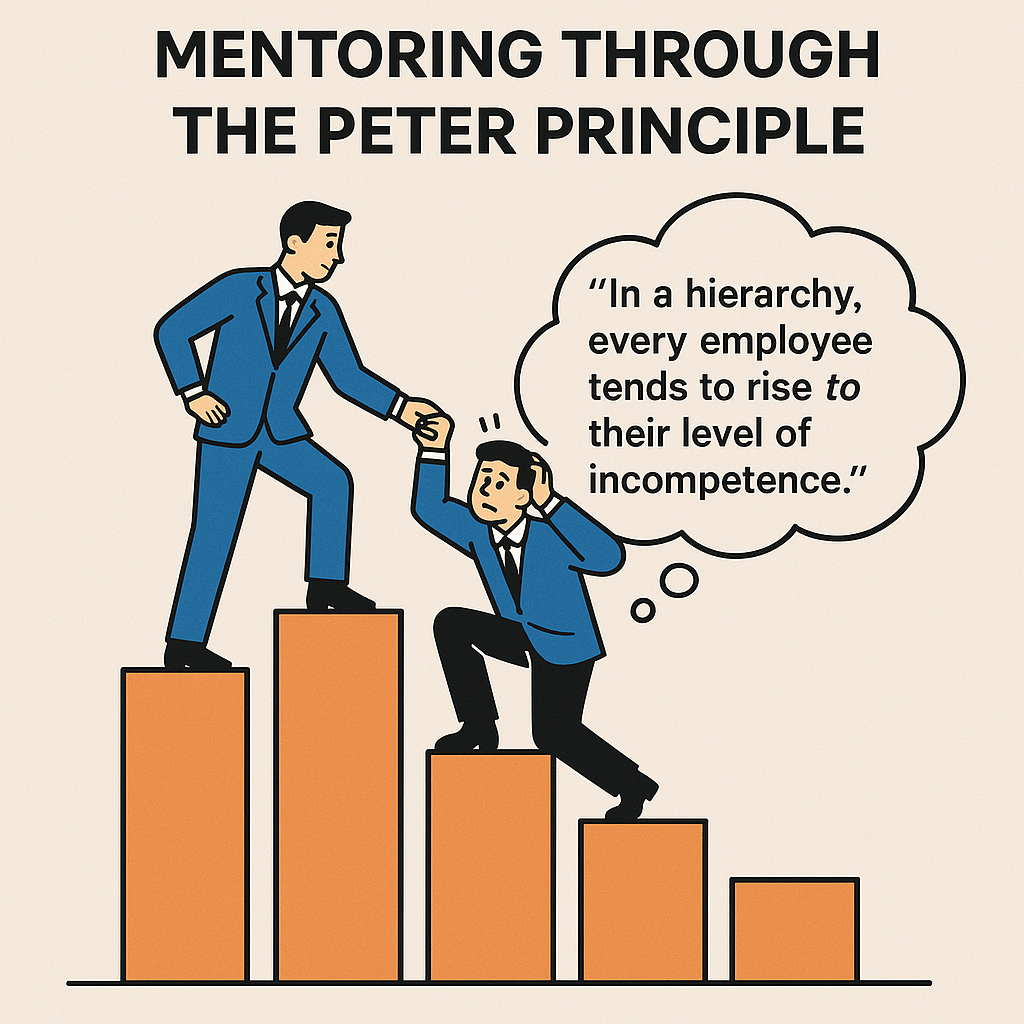
“In a hierarchy, every employee tends to rise to their level of incompetence.”
— Dr. Laurence J. Peter, 1969
Recently, I came across this infamous management concept known as the Peter Principle. It isn’t just a clever theory. It’s a trap that snags countless well-meaning professionals the moment they step into leadership. Someone excels in their role, earns a promotion… and then flounders. Not because they’re incapable, but because they’ve never been trained for what’s next.
As mentors, leaders, and developers of talent, we must do more than hand someone a new title. We must walk with them into their new role and help them grow beyond the Peter Principle.
The Problem: Promotion Without Preparation
We have all seen it (or maybe even experienced it), high performers get promoted because they’re great at what they do. But the next level usually requires a completely different skill set:
- Individual contributors become people leaders.
- Tactical executors must think strategically.
- Technical experts are asked to communicate, delegate, and inspire.
Yet, many are never given the tools to make that leap.
Mentorship Is the Missing Bridge
Avoiding the Peter Principle isn’t about lowering the bar for promotion. It’s about raising the bar for support once someone gets there. Here’s how to mentor someone through this transition.
1. Assess the Gap Between Past and Future
Start with a simple, powerful question:
“What’s different about this new role?”
Then help them define the gaps:
- What skills got them promoted?
- What skills will help them succeed now?
- What behaviors must they stop, start, or shift?
Use a quick gap analysis to map it out. This alone brings clarity and reduces overwhelm. We now have something we can work on together.
2. Normalize the Struggle
Don’t let them drown in imposter syndrome. Most people feel unprepared for their first major leadership role. That’s normal.
“You were promoted for your potential. Now, let’s help you earn the confidence that comes with competence.”
Remind them that growth is messy and that the discomfort they feel is a sign of development, not failure.
3. Develop the Missing Muscles
Early-stage leaders usually need help with:
- Delegation – Letting go of control and trusting others
- Communication – Giving feedback, holding 1:1s, leading meetings
- Time management – Prioritizing what matters most for the team
- Strategic thinking – Looking up and out, not just down and in
Give them resources, short lessons, or even role-play sessions. You don’t need a full course on leadership, just consistent touchpoints and practical tools.
4. Build Confidence With Small Wins
Confidence grows from doing. Give them bite-sized leadership challenges:
- Run a team meeting
- Handle a conflict (with coaching)
- Present to leadership
- Lead a small project
Each win reinforces: “I can do this.”
5. Create a Long-Term Growth Plan
Don’t just rescue them from the Peter Principle, help them rise above it. Develop a roadmap for the next 6–12 months:
- Milestones: What skills should they develop?
- Feedback loops: Who’s giving input?
- Mentorship: How often will you check in?
- Resources: What books, templates, or tools will help?
Mentorship isn’t a one-time event. It’s a relationship that helps people rise to meet their calling.
A Final Thought for Leaders and Organizations
The Peter Principle isn’t inevitable, it’s preventable with intentional mentorship, better training, and a commitment to promoting readiness, not just performance.
If you want stronger leaders in your organization, start building development pathways before the promotion happens and walk alongside them after it does. People don’t rise to their level of incompetence when they’re mentored to rise to their level of potential.
“We don’t rise to the level of our expectations, we fall to the level of our training.” – Archilochus
Pro Tip: Doing this helps YOU and ME grow and prepare for more senior roles as well 🙂
 deliberatedevelopment.org