
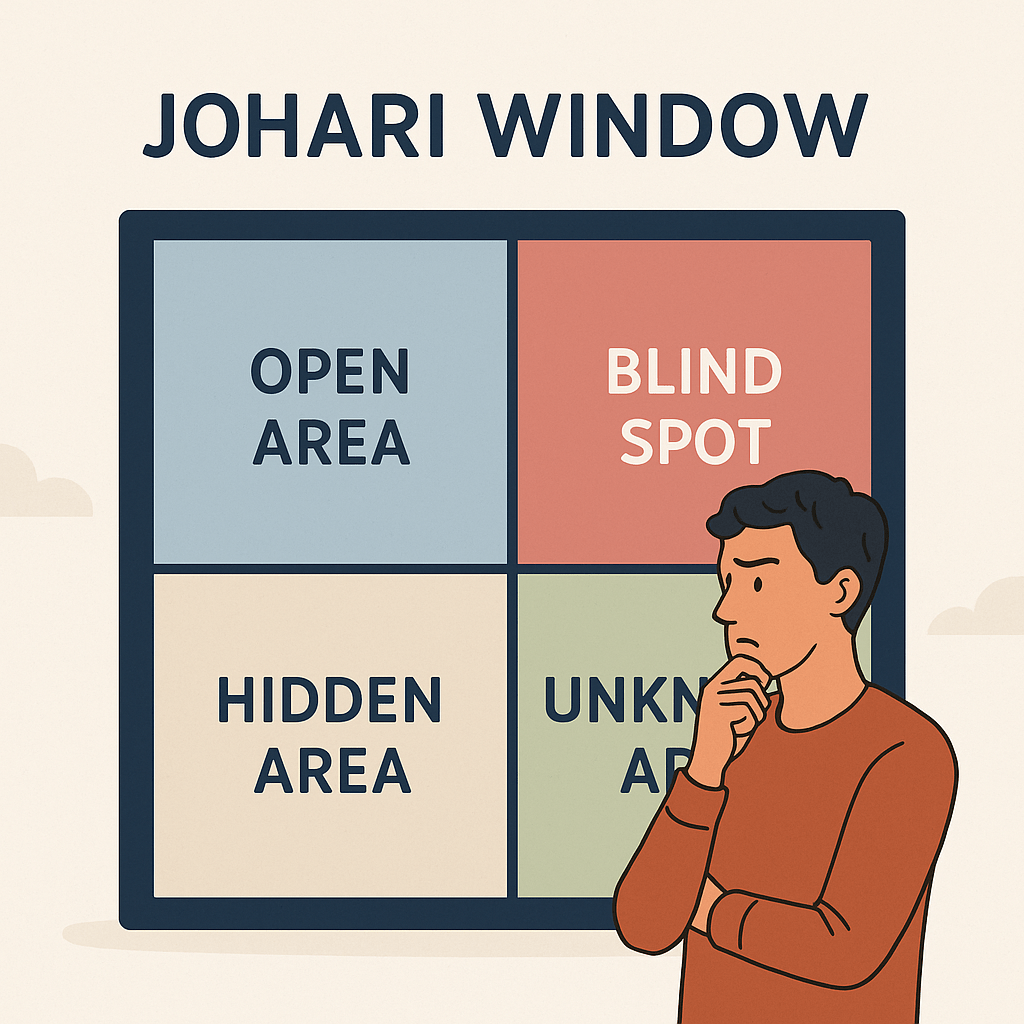
Many leaders whom I have mentored state they need more “self-awareness” quite often on their list of growth areas. This is a challenging one to work on, but there are great tools to help.
You can’t just hand someone a mirror and say, “Reflect.” Instead, you need to create space for reflection, feedback, and trust to grow and the Johari Window is one of the most practical frameworks to help you do that as a mentor.
What Is the Johari Window?
Developed in 1955 by psychologists Joseph Luft and Harry Ingham (hence “Jo-Hari”), the Johari Window is a visual model that illustrates how self-awareness and mutual understanding evolve through two key behaviors:
- Self-disclosure (what you reveal)
- Feedback (what others share with you)
It’s designed to help people understand:
- How they see themselves
- How others see them
- What remains hidden or unknown
The Four Quadrants of the Johari Window
1. Open Area (Known to self + Known to others)
- Includes traits, behaviors, and values you’re aware of and others agree with.
- The goal of mentoring is to expand this window.
Example: “I’m a detailed planner, and my team appreciates it.”
2. Blind Spot (Unknown to self + Known to others)
- Things others see in you, but you don’t see in yourself.
- Can include mannerisms, tone, leadership blind spots, or unintentional habits.
Example: A mentee believes they’re approachable, but team members find them dismissive in meetings.
3. Hidden Area (Known to self + Unknown to others)
- Private beliefs, experiences, or feelings you haven’t shared.
- Withholding too much can erode trust and authenticity.
Example: A manager hides their anxiety around public speaking, affecting their confidence.
4. Unknown Area (Unknown to self + Unknown to others)
- Untapped potential, buried fears, or patterns still forming.
- Often revealed through new experiences, coaching, or adversity.
Example: A leader discovers they thrive under pressure only after a crisis forces them to lead.
Why It Matters in Mentoring
The Johari Window is more than a psychology tool, it’s a roadmap for growth through vulnerability and feedback.
As mentors, we help others:
- Shrink their blind spots through gentle observation and questioning
- Build trust so they feel safe sharing what’s hidden
- Explore potential in the unknown zone through stretch opportunities
The larger the Open Area, the more aligned someone is with who they are and how they lead.
How to Use the Johari Window
1. Begin with Strengths (The Open Area)
For Yourself:
- Start by choosing 6–10 adjectives that best describe your personality, leadership style, and work habits.
- Focus on traits you believe are true and visible to others.
In Mentorship:
- Ask: “What words would you use to describe your leadership approach?”
- Then offer: “Here are a few I see in you. Do any surprise you?”
✅ Use the Johari Adjective List below for a structured and reflective start.
2. Seek Out Feedback (Reveal the Blind Spot)
For Yourself:
- Invite others (peers, teammates, mentors) to pick adjectives they believe describe you.
- Compare their selections with yours. Notice where they overlap and where they don’t.
In Mentorship:
- Ask: “What’s something others have pointed out about you that you weren’t aware of at first?”
“What feedback caught you off guard, but turned out to be true?”
Tip: Remind yourself (or your mentee): Feedback is insight, not indictment.
3. Practice Openness (Reduce the Hidden Area)
For Yourself:
- Reflect: What strengths, fears, or motivations do you keep hidden? What would others better understand about you if they knew?
In Mentorship:
- Model it first. Share a personal leadership learning moment:
“I used to think I came across as confident, but I learned my tone was intimidating. That feedback changed how I show up.”
- Then invite the same from them. This builds trust and deepens authenticity.
4. Step Into Discovery (Tap the Unknown Area)
For Yourself:
- Ask: “What untapped strengths might I have?”
“When do I surprise myself in good or challenging ways?”
In Mentorship:
- Encourage your mentee to try something new: lead a meeting, handle a conflict, speak publicly.
Growth often lives just outside of awareness. Stretching helps uncover it.
The goal isn’t to fill all four boxes, it’s to expand the Open Area, where trust, clarity, and confidence thrive.
The Johari Window reminds us:
“Self-awareness grows in relationship with ourselves and with others.”
Use it regularly to uncover insights, open conversations, and unlock potential.
The Mentoring Mindset: Curiosity + Courage
The Johari Window isn’t about psychoanalysis, it’s about creating a safe, intentional space where people can grow into their full leadership identity.
- Feedback reveals truth.
- Openness builds connection.
- Stretching reveals hidden strength.
“Self-awareness is the foundation of great leadership. But it’s not found alone, it’s revealed in relationship.”
Use the Johari Window to help your mentees see what they’ve been missing not because they were blind, but because no one ever helped them look.
Johari Window Adjective List
- Able
- Accepting
- Adaptable
- Bold
- Brave
- Calm
- Caring
- Cheerful
- Clever
- Complex
- Confident
- Dependable
- Dignified
- Empathetic
- Energetic
- Extroverted
- Friendly
- Giving
- Happy
- Helpful
- Idealistic
- Independent
- Ingenious
- Intelligent
- Introverted
- Kind
- Knowledgeable
- Logical
- Loving
- Mature
- Modest
- Nervous
- Observant
- Organized
- Patient
- Powerful
- Proud
- Quiet
- Reflective
- Relaxed
- Religious
- Responsive
- Searching
- Self-assertive
- Self-conscious
- Sensible
- Sentimental
- Shy
- Silly
- Smart
- Spontaneous
- Sympathetic
- Tense
- Trustworthy
- Warm
- Wise
 deliberatedevelopment.org