
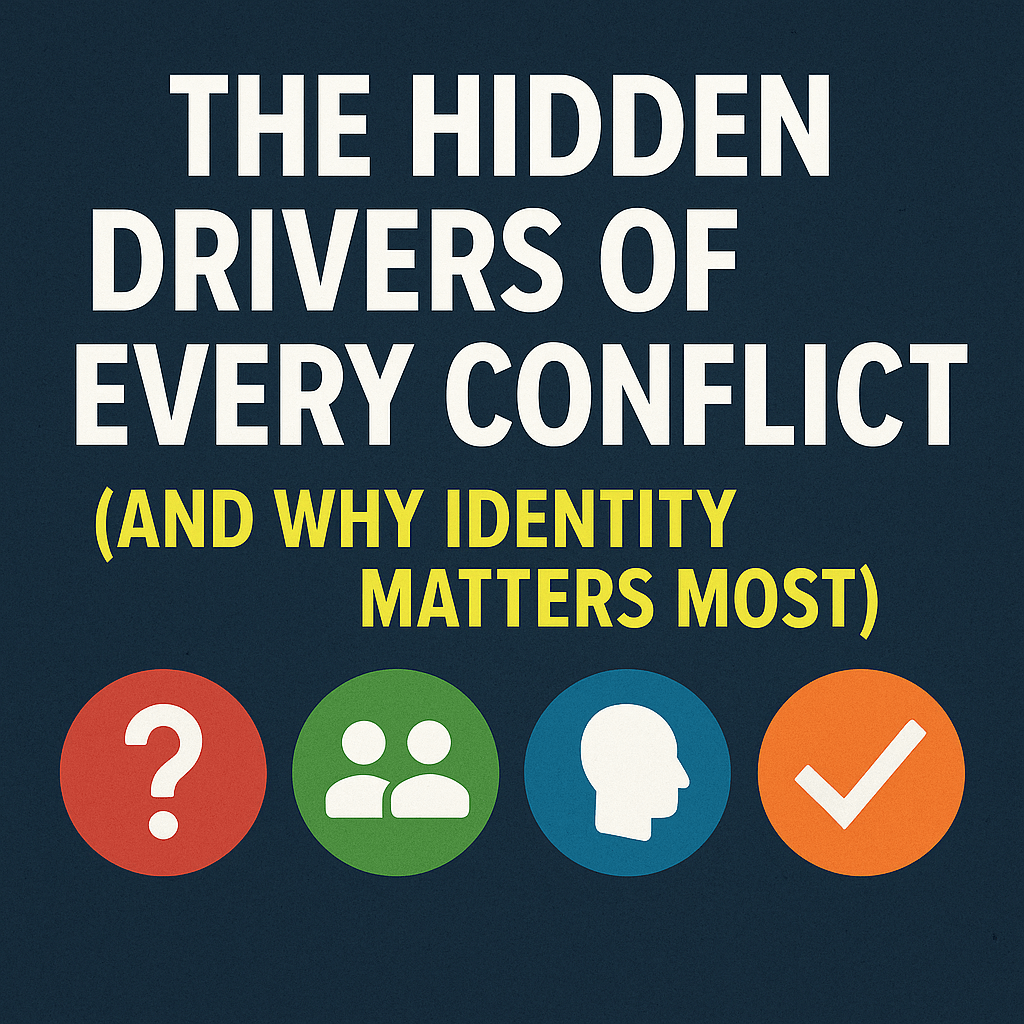
When conflict surfaces, most leaders focus on the surface issue: the budget disagreement, the project delay, or the performance concern. However, beneath every conflict are deeper layers of motivation. If you stop at the surface, you risk solving the wrong problem, or worse, leaving the real issue unresolved.
Conflict research identifies four distinct types of goals that fuel disputes: topic, relational, identity, and process goals. Strong leaders learn to uncover each one, because the deeper you go, the closer you get to the true driver of the struggle.
1. Topic Goals: The Surface Issue
Topic goals are the most visible and the easiest to identify.
- Example: “Who gets the budget?” “Where will the team meet?” “What deadline will we set?”
These are the tangible, concrete issues that spark most disagreements.
When addressing topic goals, write them down clearly so all parties see the same problem. This prevents confusion and ensures everyone is at least starting from the same reference point.
2. Relational Goals: How We Treat Each Other
Relational goals answer the unspoken question: “How do I want to be treated in this relationship?”
- Example: A junior employee may argue about the workload, but the real issue is the desire to be respected as an equal partner in decision-making.
Relational goals often lurk beneath surface disputes. When ignored, they create resentment that no “topic resolution” can fix. Ask directly: “How would you like to contribute to this decision?” This uncovers hidden drivers and diffuses tension.
3. Identity Goals: How I See Myself (and How You See Me)
Identity goals are the most overlooked yet the most powerful. They deal with self-concept: “Who am I in this conflict?”
- Example: A project lead may resist input not because of the idea itself, but because their identity as a competent professional feels threatened.
When identity is under attack, even small conflicts can escalate into emotional battles. People will fight harder to protect their self-image than they will for any deadline or resource. This is where it is vital to communicate we are attacking the problem, not the person.
Protect identity by affirming competence. Phrases like “I know you care deeply about quality, and that’s why I value your input” allow you to address the issue without threatening identity.
4. Process Goals: How We Resolve the Conflict
Process goals focus on “How will this be decided?” They are shaped by the other three goals.
- Example: If team members feel unheard (relational) or disrespected (identity), they may reject the process itself, even if the topic solution is acceptable.
Build fairness into your conflict resolution process. Even if the outcome isn’t perfect, people are more likely to support it if the process felt inclusive and respectful.
Why Leaders Must Go Deeper
Most leaders stop at topic goals. Strong leaders dig into relational and identity goals; the ones most likely to fuel the fire. By naming and addressing these deeper needs, you not only solve the conflict at hand but also strengthen trust and morale for the future.
Conflict isn’t just about what’s on the table; it’s about respect, identity, and process. These are the hidden goals beneath the surface. If you want to lead with strength and wisdom, don’t just solve the obvious problem. Discover what’s really at stake.
“The surface may shift, but core goals (identity and relationships) are the bedrock of every conflict.”
If you are interested in diving into my conflict management study, learn more here or check out the videos below.
 deliberatedevelopment.org